
 Ravdeep Roewal, Founder
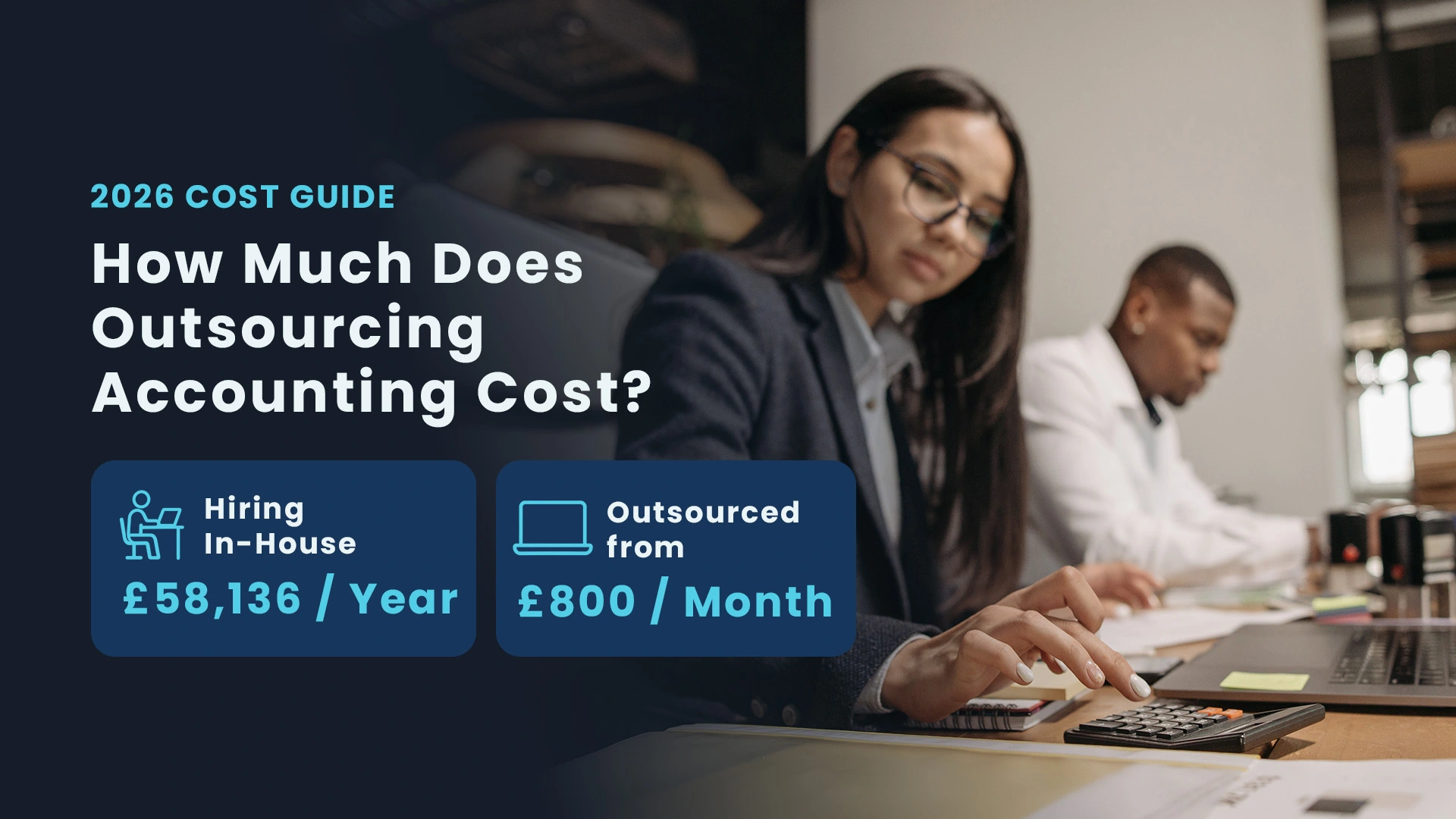
A full-time chartered or certified accountant in the UK earned a median of £50,062 in April 2025. That’s according to the ONS Annual Survey of Hours and Earnings. Put employer National Insurance and a minimum pension on top and you’re past £58,000 a year. And nobody has paid a recruiter yet.
People type “how much does it cost to outsource accounting” into Google, but the question underneath is usually simpler. Will it cost less than hiring?
For a small business, a UK accountancy firm usually charges £50 to £400 a month for a standard package. A full-time accountant who works only for you, through an outsourcing provider, starts at about £800 a month. In the end, it depends on three things: volume, the state of your books, and how much you want off your plate.
Already fairly sure you want ongoing help? Then have a look at how our outsourced accounting services work. You can also see how to hire an accountant who works only for your business. Otherwise, read on. The prices, the pricing models and the costs people forget are all below.
Key Takeaways
| Question | Short answer |
|---|---|
| Firm package for a sole trader | £50 to £150 a month |
| Firm package for a limited company | £200 to £400 a month |
| Paying per task | Bookkeeping around £25 to £50 an hour; VAT returns £100 to £300 a quarter |
| A full-time dedicated accountant through a provider | From about £800 a month, all-inclusive |
| Employing an accountant on the median salary | About £58,100 a year with NI and minimum pension, before recruitment |
| What pushes the price up | Transaction volume, VAT, payroll, messy records, Making Tax Digital |
How Much Does an Accountant Cost per Month in the UK?
It depends mostly on how your business is set up. Unbiased quotes £50 to £150 a month for a sole trader. That normally covers the Self Assessment return and some basic tax advice. Limited companies, however, typically pay £200 to £400. This is because there are annual accounts, a Corporation Tax return and director payroll to deal with.
Bigger businesses pay more again. For example, Bark’s pricing guide has £300 to £400 a month plus VAT for a growing business. Once you’re established, it’s £500 to £1,000 plus VAT.
| Business type | Typical monthly fee | Usually included |
|---|---|---|
| Sole trader | £50 to £150 | Self Assessment, basic tax advice |
| Limited company | £200 to £400 | Annual accounts, CT600, director payroll |
| Growing business | £300 to £400 + VAT | Wider compliance and reporting |
| Established business | £500 to £1,000 + VAT | Larger volumes, more reporting |
Sources: Unbiased (sole trader and limited company); Bark (growing and established).
Those figures are useful, but they hide something. A firm’s package is mostly year-end and tax work. Your accounts are one file among dozens on someone’s desk, and the day-to-day bookkeeping is often extra. So how much does an accountant cost per month in practice? Whatever the package says, plus whatever falls outside it. That’s why, when you compare accounting outsourcing costs in the UK, you should look at the monthly work, not the headline price.
Outsourced Accounting Pricing: 4 Ways Providers Charge
Quotes are hard to compare when one is yearly, one is hourly and one is monthly. Outsourced accounting pricing tends to fall into four types, and it helps to know which you’re looking at.
- 1Paying per job. The simplest. You’re billed for each piece of work when it happens. For example, Expert Market’s estimates put annual accounts and a tax return at roughly £300 to £1,000 a year. A director’s tax return is £150 to £300, and VAT returns are £100 to £300 a quarter. Fine if your books are simple and the deadlines are few.
- 2Hourly billing. You’ll mostly see this for bookkeeping, one-off advice and clean-up jobs.
- 3Monthly packages. These are what the table above describes. They’re predictable. Read the scope, though, because providers invoice anything outside it separately.
- 4A dedicated accountant. This works differently. Instead of paying for tasks, you pay one monthly fee for a named accountant. They work your hours, inside your own software. The fee covers their salary, workstation and HR. It only makes sense when there’s enough work to keep someone busy for most of the week. If that sounds right, our guide to building an offshore accounting team explains how the roles fit together.
How Much Does an Accountant Cost per Hour in the UK?
Bookkeeping usually runs at £25 to £50 an hour, according to Expert Market. Qualified accountants cost more. Bark’s guide puts the top end at £150 an hour and above. For a one-off project that’s fine. For monthly work, the hours pile up fast, and you start to think twice before sending a quick question.
Fixed Fee vs Hourly Accountant: Which Works Out Cheaper?
For ongoing work we’d usually pick a fixed fee. You know the bill in advance, and nobody hesitates before picking up the phone. However, hourly is better for short jobs with a clear end, such as tidying a year of records before a sale. One catch with fixed fees: if your volume grows a lot, expect the provider to review the price.
Experience changes the price too. Someone junior handling bookkeeping and VAT costs less than a senior who can review month-end and put management accounts together. Our offshore accountant role page shows the cost at each level.
In-House vs Outsourced Accounting Cost: The Full UK Figure for 2026/27
Salary alone is the wrong comparison. The real cost of employing an accountant in the UK includes everything you pay on top. Using the median wage and 2026/27 employer rates, it looks like this:
| Cost line | Yearly cost | How it’s worked out |
|---|---|---|
| Salary | £50,062 | ONS median, full-time chartered and certified accountants, April 2025 |
| Employer National Insurance | £6,759 | 15% on earnings above £5,000 (GOV.UK rates) |
| Minimum employer pension | £1,315 | 3% of qualifying earnings between £6,240 and £50,270 (The Pensions Regulator) |
| Total | £58,136 | About £4,845 a month |
| Recruitment (one-off) | £7,509 to £10,012 | A typical agency fee of 15% to 20% of salary (Startups.co.uk) |
Rates used: employer NI at 15% above £5,000 for 2026/27. Pension is the 3% minimum on qualifying earnings, and recruitment is 15–20% of salary.
Even that’s not everything. On top of it come holiday cover, sick days, a laptop, software licences, a desk and training. Then there’s the time you spend managing the role. A junior hire would cost less and a finance manager more. On the other hand, some smaller employers can claim Employment Allowance. It knocks up to £10,500 off the employer National Insurance bill, so it’s worth checking.
UK accountant, in-house
£58,136a year with NI and pension, before recruitment
UK firm package
£2,400–£4,800a year for a limited company, compliance only
Dedicated accountant via Aspire
£9,600–£12,700a year, full-time and only for you
Compare that with a UK firm’s limited company package at roughly £2,400 to £4,800 a year. Much cheaper, but it covers compliance, not daily finance work. By contrast, a full-time dedicated accountant through Aspire costs around £9,600 to £12,700 a year, depending on experience. That person works on your accounts and nothing else. On accounting outsourcing cost alone, the gap with the in-house figure is wide.
Is outsourcing cheaper, then? If all you need is compliance, a firm’s package wins easily. If you’ve got a full-time workload, a dedicated outsourced accountant usually costs a fraction of hiring. There are still good reasons to employ someone directly, such as needing them in the office or leading a team. Just bear in mind the UK accountant shortage, which can turn a hire into a months-long search.
6 Things That Push Your Outsourced Accounting Cost Up
What outsourcing accounting services cost a UK business depends on six things.
- 1Volume. This comes first. A business with 50 bank lines a month needs far less work than one with 1,000, and the price follows. If much of that volume is chasing unpaid invoices, a credit controller or an accounts receivable assistant can take it on. As a result, the accountant stays free for the accounts.
- 2VAT and payroll. These add work every month or quarter. Each employee means starters, leavers, pension uploads and RTI submissions, and VAT registration brings quarterly returns.
- 3Scope. This matters as well. Also, accounting is rarely the only thing a business hands over. Our list of what a UK business can outsource to India shows how far it can go.
- 4The state of your records. Tidy books in Xero, QuickBooks or Sage are quick to take over. However, a shoebox of receipts and a year of unreconciled bank lines are not. That catch-up work usually costs extra.
- 5Making Tax Digital for Income Tax. This is the newer factor. Since April 2026, sole traders and landlords with qualifying income over £50,000 have had to send quarterly updates. After that, the threshold drops to £30,000 in April 2027 and £20,000 in April 2028. Four updates a year is more work than one return, and fees will likely move to match.
- 6Deadlines. A five-day month-end close or weekly reporting costs more than a service that only appears at year-end.
Hidden Costs of Outsourcing Accounting to Check Before You Sign
The quote isn’t usually where the surprise is. It’s what’s left out of it. Our article on choosing an offshore staffing company has a longer list. Still, these are the ones that trip people up most:
- Set-up or onboarding fees. Some providers charge to take your records on. Aspire has no setup fees.
- Catch-up work on books that have fallen behind. Get that price in writing.
- Your own tax return. Many packages cover the company side only, so expect a separate bill for your own Self Assessment return.
- Anything outside scope, such as management accounts, ad hoc advice or Companies House changes.
- Software. Who pays the subscription, and do you keep the login if you leave?
- VAT on the fee. UK firms often quote plus VAT, so add 20% if you can’t reclaim it.
- Notice periods. A twelve-month contract makes it expensive to walk away from a poor service.
UK vs Overseas Providers: Why the Price Gap Is So Big
Part of it is the model. Outsourcing tends to mean handing tasks to a firm; offshoring means someone abroad joins your team. Our explainer on outsourcing vs offshoring goes through both.
The bigger part is salary. A provider placing an accountant in India pays an Indian salary. That’s why a full-time person can cost less each month than a UK firm’s part-time package.
You also get something different for the money. A firm gives you tasks done by a shared team. A dedicated overseas accountant gives you someone’s whole working week. That’s a good trade when there’s enough work, provided three things are in place. First, they keep UK hours. Second, your data stays in your own systems with proper security behind it (Aspire is ISO 27001 certified). Finally, someone in the UK still signs off whatever goes to HMRC. Not sure which roles suit this? Our guide to hiring finance talent overseas is a good place to start.
Outsourced Accounting Cost for a Small Business: 3 Worked Examples
These use the market ranges above. They’re illustrations, not quotes.
Take a landlord with £45,000 of rental income. Qualifying income is over £30,000, so Making Tax Digital applies from April 2027. A firm package at £50 to £150 a month, plus software, is the obvious choice here. A dedicated accountant would be sitting idle most of the week.
Now a VAT-registered limited company with eight staff, where the owner does the bookkeeping in the evenings. A firm package of £200 to £400 a month handles the accounts and Corporation Tax. The bookkeeping is the problem. At £25 to £50 an hour, 40 hours a month comes to £1,000 to £2,000. By that point, a dedicated bookkeeper doing the daily work, with the firm keeping year-end, often works out cheaper.
Finally, a company turning over £3 million, with one overstretched finance person covering VAT, payroll, month-end and management accounts. That’s a full-time job on its own. Another accountant on the median wage would cost over £58,000 a year. A dedicated outsourced accountant starts from about £9,600 a year, with a UK manager reviewing the numbers. And if the real bottleneck is admin rather than accounting, a finance assistant might be all you need.
So, how much does it cost to outsource accounting for your business? Start by counting the hours. The answer usually follows.
When Outsourcing Accounting Isn’t the Cheaper Option
For very simple books, accounting software and a year-end-only service often work best. That can undercut any monthly arrangement. Similarly, some businesses need someone at board meetings, with investors or leading a team. In that case, a senior in-house hire or a part-time finance director will probably suit you better.
Frequently asked questions
Next Step: Work Out How Many Hours You Actually Need
Before you ask anyone for a quote, list every finance task you do in a month and roughly how long each one takes. It’s a ten-minute job. Yet it tells you whether you need a package, a few hours of help or a full-time person. It also makes quotes far easier to compare. The cost to outsource accounting only makes sense next to the hours it saves you. If those hours add up to a full-time workload, see how our outsourced accounting services give you one dedicated accountant on UK hours. Alternatively, book a free consultation and we’ll go through your numbers with you.